ExpandDiff
Dynamic Range Expanding Diffusion for Single-Image HDR Reconstruction
École Polytechnique Fédérale de Lausanne (EPFL), Switzerland
Preprint — under review
Abstract
Single-image HDR reconstruction requires inferring missing detail while preserving the visible content of an LDR image. Differences in sensor dynamic range and exposure cause LDR images to lose varying amounts of information in shadows and highlights. We present ExpandDiff, a conditional diffusion pipeline that jointly reconstructs clipped shadows and highlights. To account for this variation, we introduce Dynamic Clipping Synthesis (DCS), which randomly samples shadow and highlight clipping percentiles when constructing training inputs from HDR targets. A pixel-space diffusion model guided by spatially-adaptive normalization then predicts perceptually encoded HDR through a bounded output head, reconstructing both clipping directions in one sampling trajectory. On the SI-HDR benchmark, ExpandDiff variants improve HDR reconstruction accuracy by 3.43 dB in PU21-PSNR over the strongest evaluated competing method, and by 7.34 dB under two-sided clipping.
Results
Highlight-only clipping (benchmark inputs)



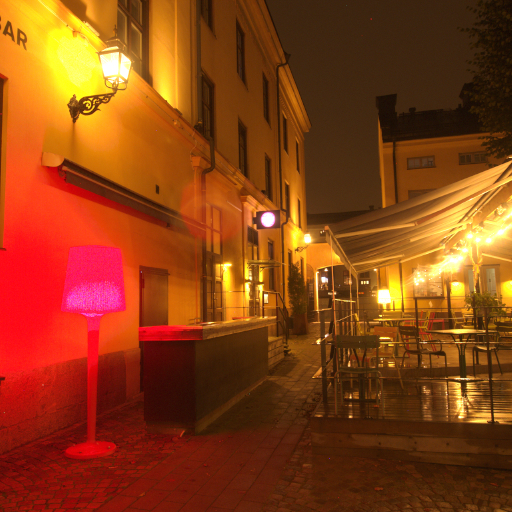
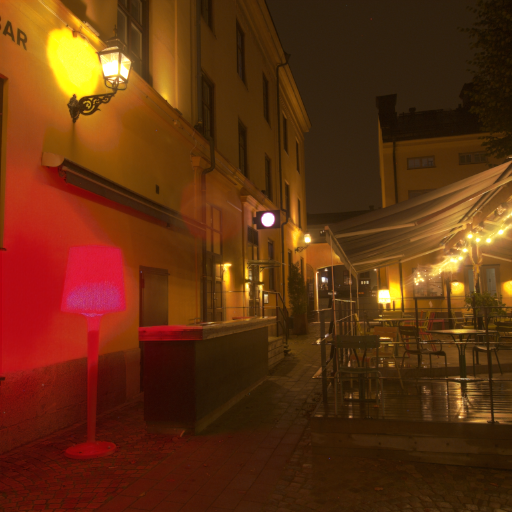
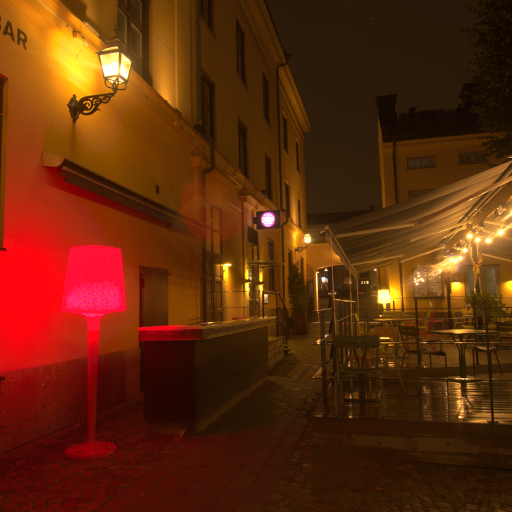
Clipping at both ends






Reconstructions from the SI-HDR references, shown after the per-image brightness alignment used throughout our evaluation. A real photograph is clipped at both ends, so we report the two-sided condition alongside the benchmark's own highlight-only inputs.